Seeing wildlife while in the woods is one of the most wondrous things that can happen. I have very fond memories of seeing a red fox on the side of the canal I was canoeing, startling a great blue heron to flight while exiting a stream, and seeing what was probably a snowshoe hare in the high meadows below the peak of Marcy. Depending on where you go, you may have a chance to see wildlife that you don't see at home. We need to know how to respect it.
The first part of this principle is your own safety. You don't want to get close enough that the animals can harm you, or you them. The distance you have to be away from the animals varies based on how big it is. Thankfully, there is one simple rule that will get you far enough away, the rule of thumb. Stretch out your arm, raise your thumb, and see if you can completely cover the animal with your thumb. If you can, you're far enough away. If you can't you need to get further away. It really is that simple.
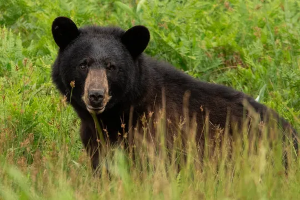
Now yes, there are dangerous animals out there that you may surprise. I'm specifically talking about grizzly bears, but black bears, mountain lions, moose, and basically any big mammals. For the most part, these animals will run away. There are situations where they can't, or you're between them and their young so they won't. I'm not going to go into the various ways of backing away, you'll have to research that for the area you are hiking and the animals that you are likely to see. Generally speaking though, if you're making noise, you won't run into this issue, they'll already have moved away before you got there. I'm talking about making a gentle conversation while on the trail, or carrying a small bell on your pack. Not anything that would not be considerate to other hikers.
The second part of this is the safety of the animals. I will admit, it is an amazing thing when a wild animal comes up and takes food right out of your hand. It's not good for the animal though, and not good in many ways. The obvious one is that this food is not their normal food, so it may make them ill. I've seen the grey jays in the White Mountains of New Hampshire take trail mix, specifically the nuts and berries, out of peoples hands. I've also seen people give them Cheetos and other junk food that's questionable if it's good for us, much less birds.
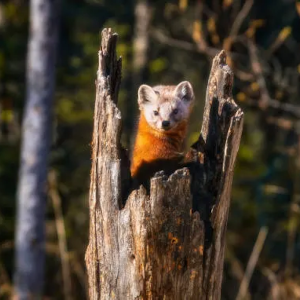
Feeding animals gets them used to us being a food source. This means the animals will start looking out for humans, approach them, and beg or steal from the humans. This may be cute when it's a small animal like a chipmunk or marten. It is not when it is a bear. That is why there is the saying "A fed bear is a dead bear". Feeding the animals that can harm us will result in the animal either being relocated, or more likely than not, killed. As a general practice, don't feed the animals at all.
Talking about bears, there is a success story to talk about here. In the 90s, there was a bear that figured out how to get to bear bags, and taught their young how to do this. As a result, in 1999 the DEC put in a bear canister requirement. The early years of that resulted in the bears figuring out how to get into some of the canisters and teaching their young. Word has gotten out and everyone is pushing to use canisters that haven't failed yet. As a result, 2020 was the last year that there was an adverse human-bear interaction in the high peaks region. It took 21 years, but we got enough compliance by humans that the bears are not automatically searching out our food caches.