Winter hiking comes with some additional hazards you don't typically face in the summer. Specifically frostbite and hypothermia. It is possible to go hypothermic in the summer, but it isn't that common. Winter on the other hand, well, it's easy to suffer from both. Both of these issues also creep up on you, and it's easy to find yourself in worse shape than you think. So, lets look at what happens and how to keep yourself safe.
First off a disclaimer. I'm a certified EMT, but I am not someone that can give out medical advice. What I am talking about below is not to be taken as medical advice, and I recommend that you seek advice of medical professionals if you have moderate to severe frostbite or suffering from hypothermia.
Frostbite
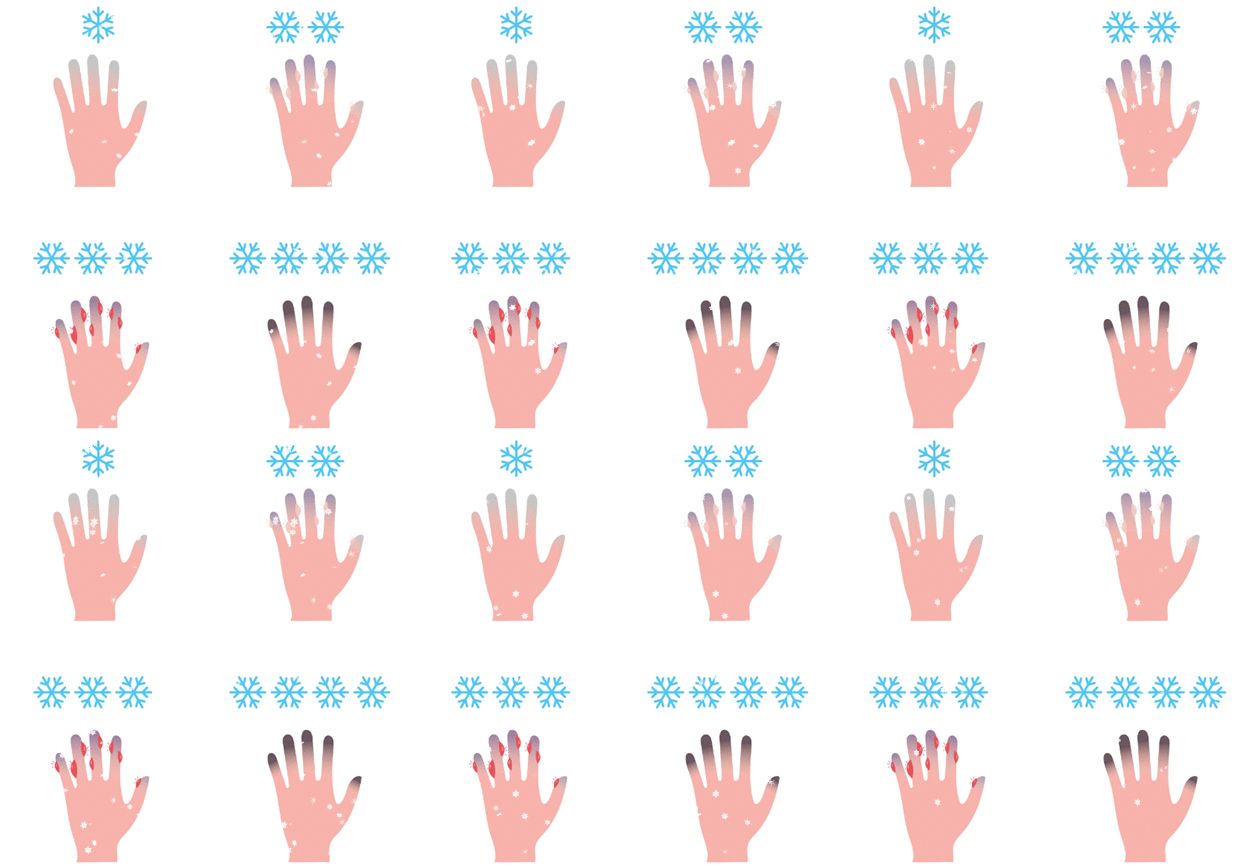
This can vary in degree, and can happen anywhere on the body. Typically though, exposed skin, nose, ears, fingers, and toes are the most common places to get frostbite. The most effective way to prevent it is to keep the area covered and dry, add hand/foot/toe warmers when needed, and if that's not working, get out of there. What is happening is the water in the cells freeze. The more that freezes, the deeper into the body it goes, and the more damage you will suffer. While frostbite is not likely to be deadly, it can be debilitating. Mild frostbite can range from just minor discoloring of the skin, typically white or red, and nephropathy that typically will resolve itself. Moderate frostbite will have discoloration and often end up blistering like second degree burns. Serious frostbite will potentially result in infections, gangrene, and ultimately amputations.
The goal is to not get to the point that you have to treat frostbite, and if you do, you limit it to the least amount of damage as possible. One of the biggest ways to prevent it is by keeping things dry. That's one reason why when hiking you should do all you can to keep from sweating. You also should keep in mind that your hands are going to get wet from snow as you hike, especially if you are climbing any steep areas. Bring backup gloves for when that happens. Having wet clothing, especially on vulnerable areas like your hands or ears, you're making yourself more prone to frostbite. As you find yourself starting to sweat, it's time to remove a layer, or open zippers and vents to cool off. As your gloves get soaked from the snow, add hand warmers and change the gloves out. If you have shells for your gloves, use them once you start up steep areas.
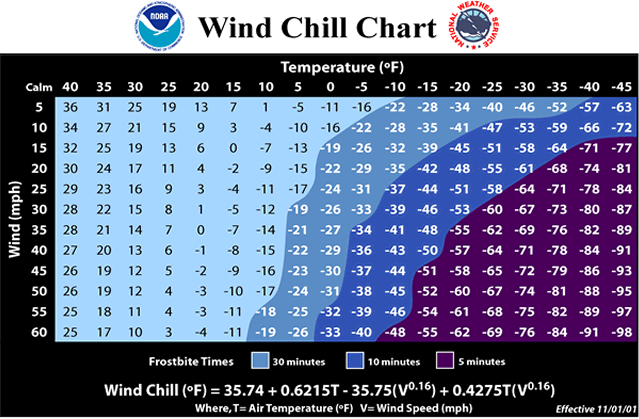
Extreme cold and high winds can also lead to frostbite. In my experience, this is typically the exposed skin that gets frostbit. It is possible when the wind chills are below -18 F for sink to freeze in 30 min. At -32 it's 10 minutes, and at -48 it's 5 minuts. When you see that there are going to be significant wind chills you should seriously consider not hiking that day. You are only putting yourself at risk for cold injuries, and risking your rescuers health and lives if you get injured. I typically start considering staying home when it's predicted to be -20 F, but I refuse to go out if its predicted to be -30 F or lower.
If you find yourself suffering from frostbite, your first thing to do is remove yourself from the cold as soon as possible Since I'm talking about hiking, this could take hours. Adding in hand/foot/toe warmers as appropriate will help. Covering with insulating clothing if it's just skin will help. Moving and increasing your internal temp, but not to the point of sweating, will help. If it's fingers or toes, trying to wiggle them will help. You're not going to be able to truly treat them though until you get out, so you want to get out as quickly as you can. That may mean you turn around, or that may mean going over one more peak because it's shorter or easier to get back that way. You have to make that call in the field.
Once you get to the car, remove any wet clothing over the frostbit areas, but be careful as your skin could be frozen to the clothing. If you cannot remove it, that's ok. The heat in the car will be what will do the work. If you're at home, soaking in luke warm water is the typical treatment. Luke warm water will feel like it's burning hot, so do what you can handle. If you're seeing major discoloration or blisters, go seek medical help as soon as you can. The goal is a slow warming of the frostbit area.
I have recently had mild to moderate frostbite on a hike. It was a warm start, and my layers were off for the day. I found my earband soaked through from sweat about 2 hours in and removed it. It was a couple days after a rain storm that turned into ice and snow, so everything was wet. I realized about 7 miles in that my hands were not only wet, but starting to freeze. I stopped, changed my gloves (liners and mitten), and added in hand warmers. A couple hours and 3 miles or so later, I did that again. This time though, I realized when I was trying to pull my liners off, I bit down on my finger and didn't feel it. Things were freezing up. This wasn't a total surprise as the previous mile was slow between trail breaking and route finding so I wasn't keeping as warm as I could have been. As I started moving more, the hands did warm up and I was able to wiggle my fingers more and more as I hiked the last 6 or so miles out. The warming in the car worked well, but the fingers all tingled in the tips. I've had that happen in the past, and it has cleared up in a day or two. As I write this, 16 days later, I still have some tingling in about 1/2 my finger tips. It's not debilitating, but it is greatly annoying to do anything with my hands.
Hypothermia
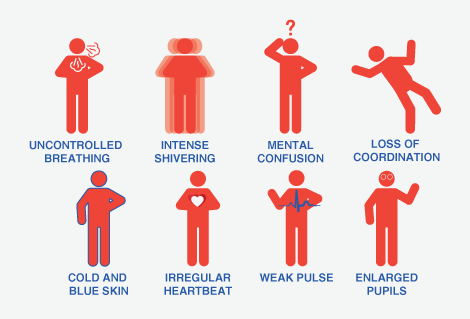
Hypothermia is the other major concern for winter hiking. As with frostbite, moisture is often a big contributing factor. You want to hike cool to stay dry, and help prevent hypothermia. There are again mild to severe stages, but these are based on your core temperature that you really are not going to measure in the field. Instead, the visible signs are shivering and not shivering. The sings that are harder to see though is a slow decrease in mental capabilities. If you're out by yourself, you won't notice this at all. This is a big reason why when winter hiking you should not hike alone. If you do hike alone, bring a satellite device that tracks you, and turn on the tracking. This way the rangers can find you if something happens, or find your body if the worst happens.
If you're shivering, you're heading towards hypothermia, but your body is trying to compensate. It's not bad that you're shivering when you're stopped and start hiking again in a short period of time. If you're shivering while hiking, you should add an insulation layer. If you are all layered up and can't stop shivering, and hiking isn't warming you up, you're hypothermic. You need to head to the exit and get warmed up. It would not be a bad idea to eat and drink something hot if you can. It would also not be a bad idea to call in help if you can. This can progress to severe hypothermia quickly if you are not lucky. It is better to call in the rangers with the warming and transport gear that they have when you start having trouble, and hike out to meet them (or whatever they tell you to do). Best case, you meet them on the trail, they feed you something warm, and you walk out on your own power.
When you stop shivering, that's when you're really in trouble. Your body is no longer compensating and you're starting to shut down. This is often when your companions will start noticing that your mental abilities are declining. You're going to start making bad decisions and often start slowing down. This is a true emergency at this point. If you haven't contacted the rangers, do so and follow what they tell you to do. If you cannot contact help and you have the manpower, send 2 people to go get help. If the person that is hypothermic is having trouble walking, your best bet may be to build a fire, so be sure that you hike with the 10 essentials and know how to build a fire. Typically, fires are allowed in emergency situations even where fires are banned, and this is definitely an emergency situation. If they are wet and there is dry clothing they can change into, change them into it. Using emergency blankets/bivys also are a good idea here, but the person is not generating enough heat themselves, so a fire, or sharing the mylar with them so they can warm up is preferred. If they are able to follow commands and swallow, warm liquids are not a bad idea. Ultimately you want to get them out and to a hospital as quickly as you can.