Winter hiking is fun and challenging in different ways than you would think. It can also be more dangerous, but the risks can be mitigated to make it not much more dangerous than hiking in the middle of summer.
The Dangers
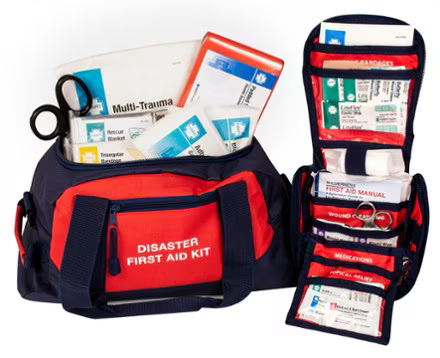
Lets first look at that dangerous aspect. The types of physical injury are really the same as in the summer. The majority of ways you'll hurt yourself while hiking are slips, trips, and falls. These will generally result in scrapes and bruises, strains and sprains, and in the worst cases a broken bone. These injuries don't really disappear with the snow and ice. In shoulder season (typically the late fall one not the spring one) when ice starts showing up unexpectedly, these injuries are going to be easier to happen. As we go later into winter hiking though, that slippery snow and/or ice typically is replaced by packed snow, and you're already wearing snowshoes or traction devices so it should really make no difference.
Temperature and nutrition are probably the other 2 major causes of issues in the backcountry. Electrolyte imbalances, low sugar, under/over hydration. They all are year round issues when hiking and the way to prevent them are the same year round, essentially eat what you need to eat and drink what you need to drink all when you need to. Temperature issues are a little different though. In the summer, hyperthermia, or heat exhaustion and heat stroke, is the major concern. In the winter, these still can be an issue if you don't do layer management well. The bigger winter concern though is hypothermia. This is when your core body temperature drops too low that you are unable to function. It's not a winter only issue though, it is possible to go hypothermic in summer. Getting too hot or cold though is all about layer and moisture management along with maintaining proper nutrition.
One hazard that you mostly find in the winter is postholing. This is where you are hiking in boots and your leg sinks down inches to feet in the snow (or mud, but usually snow). If you're taking your time, not a big issue. If you're moving at a good pace, you can very easily strain, sprain, dislocate, or even break your leg. This is extremely dangerous for you, and you could very well need a carry out, surgery, and months of recovery. The use of snowshoes and skis significantly reduce the risk of injury. Related, if you're postholing all over a trail, you make it more likely that the people that come up after you hurt themselves because of your postholes. It could be that they froze as holes in what is now ice, or the tips of skis or snowshoes catch on them causing the person to trip and fall. Please, wear the appropriate footware and don't posthole.

The types of injuries really aren't significantly different, so why is it potentially more dangerous to hike in winter? Well, for slips, trips, and falls, you may end up going further than you would have in the summer, and wearing traction on your feet may end up causing other injuries you wouldn't get in the summer. But the biggest reason is what you will face if you have to be rescued or are significantly slower on the way out. In the summer, getting stuck in the woods over night, where the temps may only drop down into the 50s, it won't be a fun night, but it's not likely to be deadly. In the winter, your highs are at best not much more than freezing and your lows could very well be significantly colder, and that's before you factor in the wind. If you have to spend a night in the woods in the winter, hypothermia is a major concern.
Rewards
That's the potential downside of winter hiking. Why do it then? Well, there are many reasons. First, the trails are completely different than in the summer. If there is enough snow, the rocks, roots, etc that cover the trail disappear. When hiking where snowshoes are common or required by law, the trail becomes relatively smooth and so well packed that it's almost like a sidewalk. The other thing is with all the leaves off the trees, the views you get are just different than you do in the summer. When you combine the two where you're hiking many feet above the trail and the leaves are gone, you just get some of the most spectacular views you could imagine. There is a downside to that though, you're hiking feet above the trail which means you're often hiking with branches in your face.
Layering
Knowing all that, how do we hike safely in the winter? The biggest thing is layering and temperature control. In the winter, sweat is the enemy, and you need to do everything you can to prevent a buildup of moisture. When I'm talking to new hikers about winter hiking, I always tell them that you want to hike cool. If you feel warm when you start, you're going to sweat. If you feel cool or slightly chilled, that's a good thing as movement will warm you up. When you stop for extended breaks though, put on a layer until you start again. Lets look at what the layers should be.
To start off, none of your clothing should be cotton, including your underwear. Cotton will hold on to water and won't provide any insulation value when wet. Synthetics won't hold the water and may wick it away. Animal wool based fabrics will still give you some insulation value when wet. With that in mind, on top of your underwear, you should first have a base layer. This layer will wick moisture away from the skin and help keep you dry. This layer can be of different thicknesses from thin silk to a thicker synthetic that not only wicks moisture away but also provides some insulation value. The next layer, the mid layer, is your insulation. This should be something that traps air and holds in the warmth. Wool sweaters of fleeces both are good examples here. The outer layer is about keeping the wind and weather off of you. This should be a wind and water proof layer.

Layering is not just for your legs and torso. You have to think of doing similar for your hands, feet, head, neck, and face. With feet, you may want to try wearing 2 socks with the inner one being a wicking layer. For hands, you may find that multiple layers work best here too with a wicking liner, an insulation layer, and a waterproof shell. The head can be a little more difficult as that's a very common place to find yourself sweating, so you may be wanting to hike with no layer on your head to help cool yourself off. Ears though will freeze quite easily, so maybe you want to try a headband. Balaclavas and buffs are great as they can keep your neck warm and be pulled up over the rest of the head when needed. Face masks also are great when you get to the point that your nose is getting too cold. Finally, when you get to higher elevations and high winds, goggles may be what you need.
This now brings us to boots. First off, you will want to be wearing boots, not trail runners. The boots should be waterproof and should be compatible with all your specialized foot gear (microspikes, snowshoes, and crampons). In general, trail runners will not work with crampons, and they may have issues with snowshoes. A pair of boots that come up at least to the ankle will be significantly better. The big debate though is insulated or not. That is truly a personal preference. I hike hot, so even with my regular boots and heavy socks, I come out with damp feet from sweat. Others, especially those with circulation issues, will find that insulated boots will be preferred. Just be sure that whatever you are wearing will work with the traction and flotation equipment you plan to use. The other piece of foot/lower leg equipment you will want to invest in are gaiters. These will keep the snow (and mud in warmer months) out of the boots. A pair of gaiters will do wonders in keeping the feet dry.
In addition to all that you are wearing, you need to plan for that unexpected night out or something happening where you find yourself totally soaked. This is more likely than you would think as we are prone to hike across frozen rivers and lakes to shave off some distance. It is possible that you find a weak spot in the ice and fall in. If that happens you need to change clothes ASAP. Similarly, if you're going to spend the night out there, you will be warmer in your emergency shelter if you are wearing dry clothes. So, you really want to have a full change of at least your base and insulation layers. In the summer, it's typically just a change of socks, but now you need everything. Gloves are probably the one thing you will find you will be wanting to change out at least once every hike. Have at least 2 pairs of gloves when hiking in the winter. You use your hands more than you think and your gloves will get wet.
Water
Water becomes something else that you have to worry about in the winter. The first concern is the water you are carrying. If you're like me and like to use a bladder, you're going to find that bladders fail in the winter. You can buy insulated tubing which helps. You also can keep the bite valve tucked into your shirt which also helps. If you keep sucking on it every 5 or 10 minutes, keeping the water moving will help keep it from freezing. Using the most basic of bite valves, what Camelback uses, will also help. That all said, I have only been successful in keeping the bladder working until about 10-15 degrees F. Below that, I have mostly had it fail. That means that you need to bring water bottles for your water. If you're just starting out and not wanting or able to spend money on insulated bottles, you can wrap your bottles in heavy socks, maybe add a hand warmer, and store it upside down. This is done so that any ice that forms will not be blocking you from drinking the liquid water. Ideally though, you will want to have insulated bottles, and likely want to fill them up with warm or hot water before the hike.
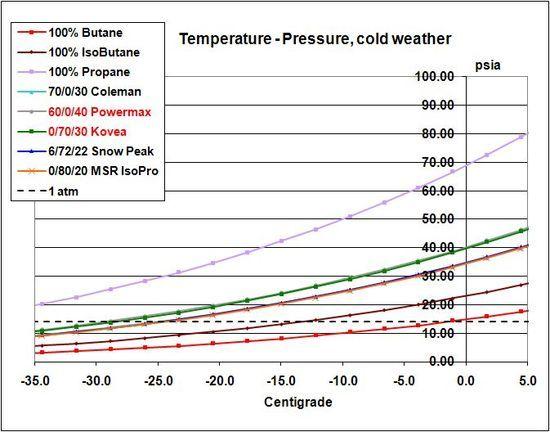
Having to gather water also becomes more difficult in the winter. It is possible to find running water, and you can pump from it. You can only do that once though, because after you do it, your pump will freeze in your pack. So, instead you're going to have to use chemical means or heat if you're doing it with running water. For chemical purification, you will need to read the instructions on how much to add. Near freezing water may require different amounts of tablets or longer to treat. The other way to go about purifying water is to boil it. This means a pot and stove. For the stove, liquid fuels are preferable. This is because the butane and isobutane canisters start to loose pressure at lower temperatures making them not work. Stoves that use white gas on the other hand vaporize the liquid fuel as it goes through the flame, and they will work in much colder temperatures. If you're planning on melting snow, you're going to want to first add some water to the pot and get that heating up before you add the snow. This will be much more efficient in the melting and eventual boiling of the snow. Just be aware, snow is not going to be clean, you'll still find a lot of dirt in it if you have to do this.
Sun and Light

The sun is also something you still need to be aware of in the winter. Sunburn is still a thing. The snow is really good at reflecting the light back at you, and exposed skin can easily get burned. The bigger issue though is snow blindness. This is due to the snow reflecting the light into your eyes. A good pair of sun glasses can do wonders on the sunny days. The sun is also going to be rising and setting later and earlier giving you shorter days to hike in. This means you're likely to be hiking with headlamps. I highly recommend carrying 2, and carry backup batteries. The reason for 2 is you need to be able to change batteries, and to do that, it's easiest done with light. If your head lamp is dead, you're going to be using your phone and it's just awkward to do. The other thing is your battery choice. The cold kills batteries quickly. You want to make sure your batteries can handle the cold. This means you want lithium batteries instead of the regular alkaline ones.
Something else that really should be practiced, especially in winter hiking, is the turn around time. The general idea is that you determine at what point you should be half way done with the hike, and you should be past the half way point of your hike, or turn around at that time. I have a more detailed explanation here.
Specialized Gear
At this point, we've covered all the typical things that happen in summer and winter and what you need to modify to make it work in winter. Winter though has some specialized gear that you won't use in the summer. I'm talking about traction and flotation. In general, you get what you pay for here. This is really one place where you do not want to go cheap.

Microspikes
The simplest traction device is the microspike. This is probably going to be one of your most used devices, especially if you push your winter hiking into either of the shoulder seasons. Microspikes are great for icy and slippery conditions. You'll likely be able to use them for the vast majority of what you face on your hikes, and will probably try to use them where you may need something more aggressive. Not all microspikes are appropriate for the back country. You want to have the kind that is a bunch of little triangles. The best brands are Hillsound, Kahtoola, or EMS Ice Tallon. Hillsound's trail crampons are my preference, and based on what I've seen mentioned online, is likely the best brand closely followed by Kahtoola. The EMS brand has been known to have metal fatigue and break in ways that you can't easily field repair. Hillsounds are also the most aggressive kind and if you have files, you can re-sharpen them. I have seen people try to use Yaktrax branded stuff, and they typically have a much more difficult time on inclines. The coil or dot style microspikes are great for at home, but totally inappropriate on any trail that has significant incline.
Flotation: Snowshoes and Skis
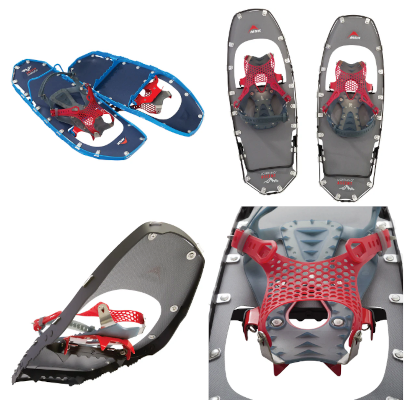
Flotation is the next thing you will need. These are snowshoes. You want a pair of mountaineering snowshoes to go hiking. The top brands here are MSR and Tubbs, and my personal preference is the MSR Lightening Ascent. There are a few things to look for in the snowshoes. First, does it have a heel lift, aka televator. If it doesn't have that, don't even consider the shoes, they are not mountaineering shoes. This little device is typically a wire that you can pop up under your heel and allow you to keep your foot closer to neutral when climbing. This seriously saves your calves on long or steep uphills. The next thing to look at is the traction. The shoes should have serious traction on the bottom. At minimum you should have a set of aggressive teeth on the underside of the binding, generally the ball of your foot. There should also be traction on the bars going across the shoe. Finally, you have the bindings. This is really where personal preference comes in. The 2 typical bindings are either a basket that wraps around the toe, or are multiple straps that go across the foot. I personally find the basket type easier to use and more stable overall, but that's my preference.
The other kind of flotation device is the backcountry ski. These typically are wider skis that can have skins added to them so that you can ski uphill. I personally have no experience with them, and they truly are less common to see than snowshoes. Those that use them though, love them. It is also not uncommon to find people with cross country skis to go in from the parking area to the start of the climb, then switch over to snowshoes when the climbing starts, stashing the skis and possibly boots.

Crampons and Ice Axes
Finally, we have crampons and ice axes. These are not used as much as you think. They're really are only needed on the really steep areas. Most of the time snowshoes or microspikes will be more than enough. When you need the crampons though, you really need them. Grivel, Petzl, and Black Diamond are the most common crampons to find. In general for hiking 10 or 12 point crampons are all you need. These devices typically need a sturdy boot in order to work, so when you're shopping for them, take your boots and try them on. Strapping them on can be confusing too, so ask the people at the store, watch videos, or get some training in how to use them.

Along with crampons, you will want to use an ice axe at the same time. Again, Black Diamond, Grivel, and Petzl all make these. The typical mountaineering ice axe is a straight shaft with a spike on the end, and the head has a pick end and a flat blade end. There are ice climbing axes which are not what you want and these typically are curved, have no flat blade, and have handles built in. For hiking, your ice axe will replace your trekking poles when in use, and the climbing style won't be helpful. The ice axe can also be useful even where you don't need the crampons in that it can be used to chop up ice around ladders, or cut foot/hand holds into the snow as needed. I highly recommend though that you look around for classes on how to use these two pieces of gear. There are specialized techniques that make their use easier, and when you're talking the worst, where you find yourself in a fall, there's nothing like practicing a self arrest with the ice axe. There is also a specialized hiking pole called a Whippet that gives you some of the functionality of an ice axe. Generally speaking, the self arresting capability. Having one of them can replace most needs for the ice axe. I have seen these come in handy with controlling the speed of your butt slides.
Webbing and Rope
One other thing I carry in the winter that can make the difference between continuing on or turning around is 50 feet of 1 inch webbing. This can be thinner or rope of some kind instead of what I carry. I personally have found it helpful in a couple places. Specifically when you find yourself at the top of a steep icy section. Assuming you have an anchor point (ideally sturdy tree), you can wrap the webbing around the tree (just put both ends on opposite sides and put the center of the webbing on the uphill side. No knots, just looped around the anchor so it can be pulled down after you) and lower yourself down half the length of the webbing. Release one end of the webbing and pull it down. Repeat as needed. Of course, it can be used the other direction too. If you find that only some of you have the needed traction, or the snow is not cooperating in your climb, someone can go first and get the line set to assist others climbing up. Similarly, you can drop your pack, tie the webbing to it, and pull it up after you or drop it down before you. It is a versatile piece of equipment that is truly worth having.
Conclusion
Winter hiking can be a lot of fun, and it will very often be as rewarding or more rewarding than your summer hikes. The trails are less crowded and if you're lucky, they are packed well enough that you won't notice the rocks and roots that you do in the summer. It can be more dangerous, but the danger can be lessened with some caution, training, and specialized gear. If you haven't done winter hiking and are interested, look at your local outdoors clubs and see if they offer winter hikes. I know that where I live, ADK does varying levels of winter hikes, and I am fairly confident that other clubs do too. You can also take a look at many of the social media sites and find like minded people to go hiking with. Be careful with these groups, the leaders may not be vetted like they are with the mountain clubs. That said, the groups that I've hiked with through social media have been mostly great.