Local outdoors groups have been putting out maps and guides for their trails for ages. I have a reprint of one that was published by the fledgling Adirondack Mountain Club (ADK) that dates to the 1920s, and I know there are other clubs that have a history of guides that goes back a long ways. The current guide books are worth their weight in gold as they will give you relatively impartial and objective information about the trails. Trip planning as I described relies heavily on modern technology, but it has its issues that pairing it with a guide book can make the difference between a fun trip and a horrible time.
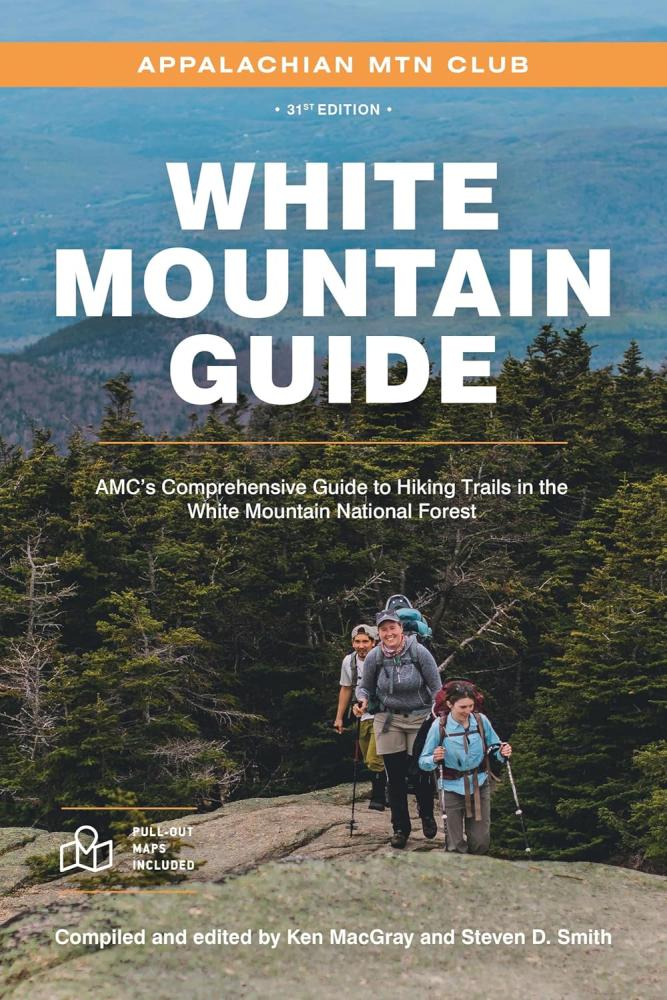
As a practical example of this, I did 3 hikes at the end of October 2025 that by the numbers were very similar, 2 of which I would have called as being a wash as to which would be more difficult. Reading the guide book put those numbers in context and agree with what my experience was. These hikes were in the White Mountains, and the guide book was the AMC White Mountain Guide.
Flume and Liberty: 8.8 miles, 3677 feet. (9.2, 3688 by GPS, 1.0 MPH pace)
Garfield: 9.5 miles, 3079 feet. (9.7, 3061 by GPS, 1.4 MPH pace)
Tom, Field, and Willey: 8.9 miles, 3583 feet. (9.6, 3615 by GPS, 1.2 MPH pace)
All 3 hikes are about the same distance and elevation. Maybe you can say Garfield would be slightly easier since it is about 600 feet less elevation, but you wouldn't really say Flume/Liberty would be that different than Tom/Field/Willey, they're within 100 feet of elevation and 0.1 miles by map. You couldn't be any more wrong. Subjectively, Flume and Liberty are significantly more difficult than the other 2 hikes. You could argue over which of the other 2 was more difficult, they both had their challenging sections, but I would call them similar with Tom, Field, and Willey probably being a hair harder. Based on the pace of the hikes, Garfield would be the easiest.
So, the top line numbers are only part of the story. Without the advantage of hindsight, how could we know this going in? Well, there are a two main ways. The first way is to look at the elevation profiles of the trips, and specifically the slope of the profile:
Flume and Liberty

Garfield

Tom, Field, and Willey

These are 3 completely different profiles. Flume and Liberty has a significant elevation climb in the half mile before Flume. The map planner places it at over 90%, but the GPS trace only has it in the 50-60% range. Garfield on the other hand has only a short, 0.2 miles of steep right at the top, and Tom, Field and Willey (with Avalon added on) has a couple short steep ups and downs spread across the trail. The slope would tell you that Flume and Liberty would be more difficult, possibly going into rock climbing which is indeed the case.
Reading the guide you get for the Flume Slide Trail (our way up Flume):
"The trail's upper section is extremely steep and rough, with smooth, polished rock slabs that are very slippery when wet (and they are nearly always wet due to the many seep springs on these steep slopes). This is one of the most difficult sections of trail in the White Mountains; several serious injuries have occurred here. Flume Slide Trail is not recommended for descent, and its use is discouraged in wet weather, when the ledges are more dangerous than usual." (31st edition, page 165)
For the Garfield Trail:
"Most of the way the trail follows an old tractor road used for access to the former fire lookout, and its grades are easy to moderate all the way to Mt. Garfield, except for the short, steep pitch on Garfield Ridge Grail just below the summit." (31st edition, page 176)
For Tom, Field, Willey, and Avalon:
A-Z trail: "A-Z trail descends slightly, crosses a brook, swings right, and soon begins to climb more steeply. The trail bears left and continues climbing steadily reaching the hight-of-land at 1.0 mi., where Mt. Tom Spur diverges right." (31st edition, page 189)
Willey Ridge Trail: (we did this both directions): "It then climbs, steeply at times, along the west side of the ridge, passing a blowdown patch that offers a restricted view into the Pemigewasset Wilderness." (31st edition, pages 192-193)
Avalon Trail (we did this down): "Avalon Trail soon begins a sustained climb that is steep, very rough, and rocky. Near the top, the grade moderates and the footing improves, and at 1.8 mi., in the small col just below Mt. Avalon's summit, a 100-yd. side path diverges left. This path climbs steeply with several ledge scrambles to this fine, ledgy viewpoint; ... Avalon Trail passes through a flat, ledgy area with restricted views, climbs easily through a switchback, and then swings right for a steep, rough climb, with some slippery ledges and one restricted view to the northeast." (31st edition page 189)
Doing the research, both the book and looking at the elevation profiles and slope, both tell you that by far, the Flume/Liberty hike was going to be the most difficult, which is why we did it first with fresh legs. It would then say Tom/Field/Willey/Avalon would be next most difficult and Garfield would be the easiest. This is what my experience on these 3 hikes is too.
Now why did I not look at crowd sourced information like AllTrails? It's because it's crowd sourced. A person's fitness, hiking skills, hiking history, and personal fears and phobias all show up in the reviews. You have no idea what their experience is compared to yours, or how they hike compared to you. Unless you've hiked with someone in the past, you have zero basis for comparison. Overall, I personally found that the flume slide section was one of the harder sections of trail I have ever hiked. It ranks up there with some sections in the Adirondacks (Sadleback Cliffs, Little Haystack descent to Haystack, Slabs on Algonquin trail, Allen Slide).
After the trip, I know I said that the Flume/Liberty loop was probably in the top 5 hardest hikes I've done. But even that is tempered by the experience I gain with every hike afterwards. In the mid twenty-teens I took a friend up Algonquin, and I was so out of shape and didn't do the research on the trails I should have beyond looking at the map and wanting to do something I hadn't done before so I could give a friend a good time. At that point, that was by far one of the hardest hikes I had done. Looking back though, and having done that hike a few times since, it really isn't high in my list any more. I've gained experience and am in better shape. That all plays into what one experiences. As I write this, the Flume/Liberty loop is in the top five, maybe top 3 for how difficult I found a hike. In 5 years, who knows where it will be.
All this goes to show you that crowd sourced reviews may give you an idea, but they are not always reliable or relatable to your personal hiking abilities. Even your past hikes may not be useful because you gain experience, get more fit, and the weather may be more/less favorable. This is why objective information like the elevation profile and slope combined with mountain club trail guides that are focused on just describing the trail and not giving opinions on it are much more reliable.