Yesterday I lead a hike up Noonmark for ADK. This is the second of what has now become my tradition of winter warmup hikes. Hikes designed to get you used to carrying the heavier pack and hopefully walking in microspikes and snowshoes. The first one was the week before going up Rooster Comb and Snow. While the hike up those peaks is generally low grade and minor scrambles, the hike up Noonmark is full on climb for most of the way up with some very steep sections that can test your technique.
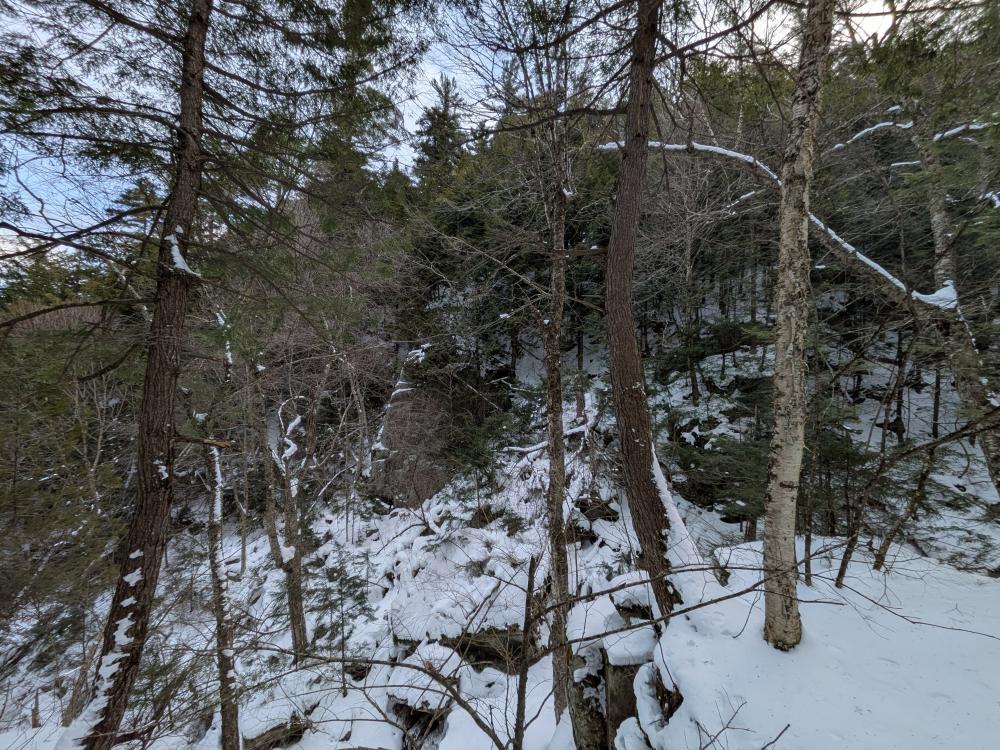
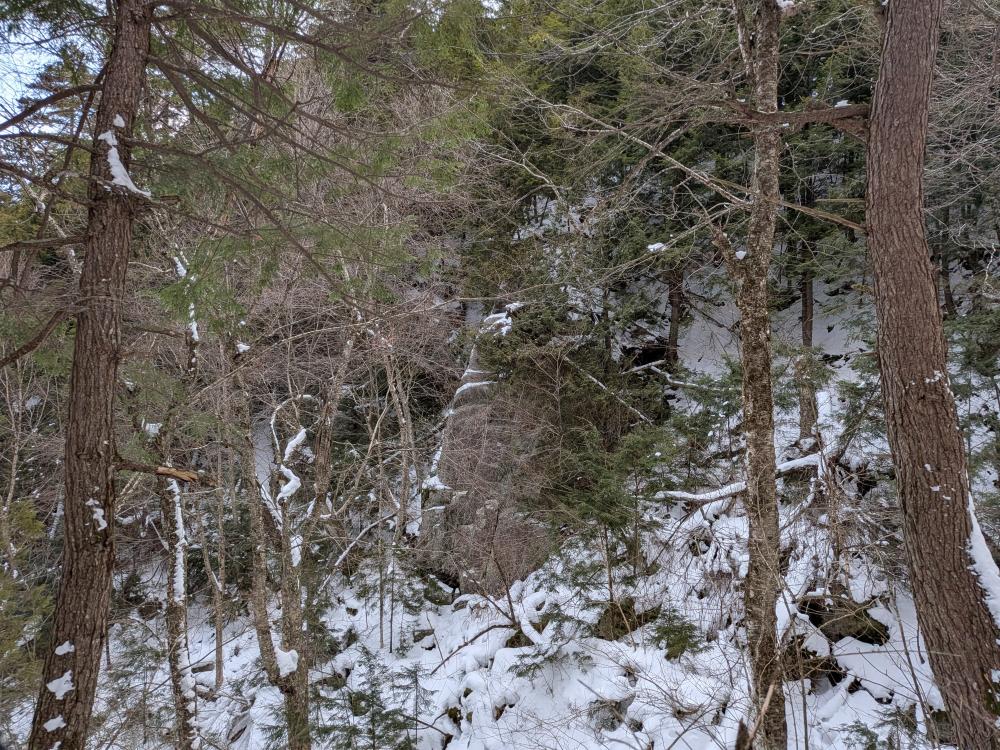
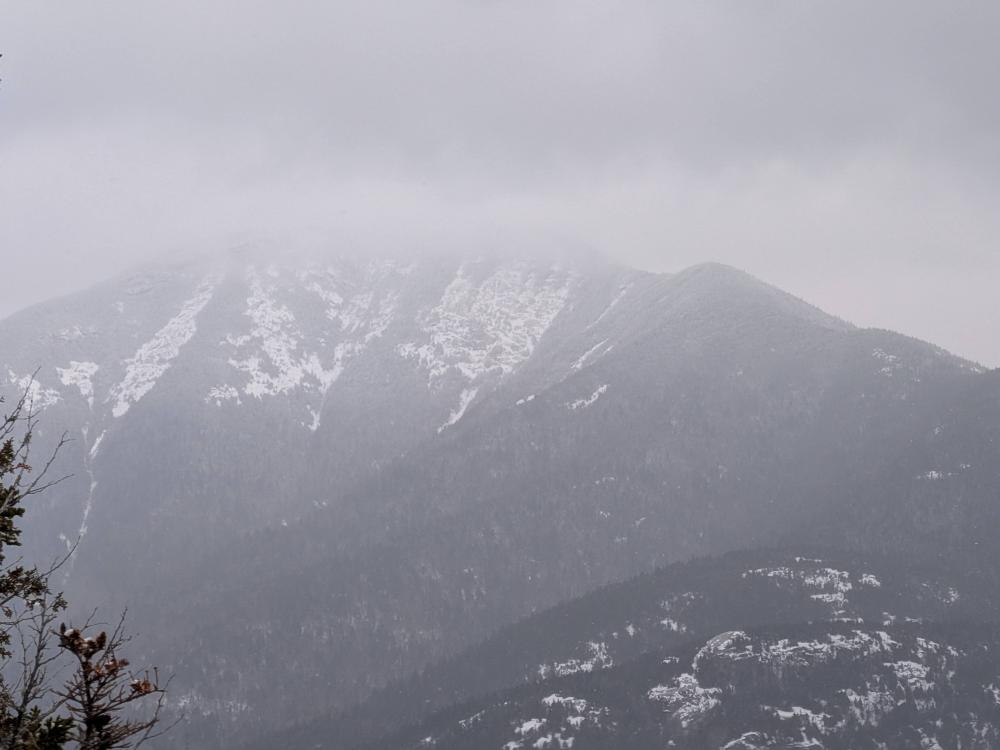
We started off, barebooting on the road to the trail register. At that point, the driveways were not recently plowed and they looked like 4 or 5 inches of snow, so we decided to save the weight on our backs and put our snowshoes on there, and they stayed on until we got back. There was a group before us that was microspiking it, and did so about 1/3 of the way up the Stimson trail. I was comfortable with the shoes and was glad to have them on some of the initial steep sections. The snow cover varied. There were points where there was a couple inches, then drifts of a foot or more. It was generally a light, unconsolidated snow though, which on the steep sections started to cause issues. Unfortunately, by the time we got to the first viewpoint, it was starting to snow, and when we got on top, there was absolutely no view due to the snow, and plenty of wind. It got bad enough I had to put up the balaclava. What can I say, I hike hot.
The top 0.3 or so miles is where there are 2 super steep sections. Everyone was having issues with these sections. Quite often you would get your foot planted, step on it, lift your other foot up, and the planted foot slid. It didn't really matter what kind of snowshoe you were wearing, they all were doing it. I was playing sweep for the hike, so I ended up being the one to help stabilize one person that was having a lot of trouble getting up those sections. A couple times I though I was going to slide down when they slid and I caught them, but I fortunately was able to get good bracing.
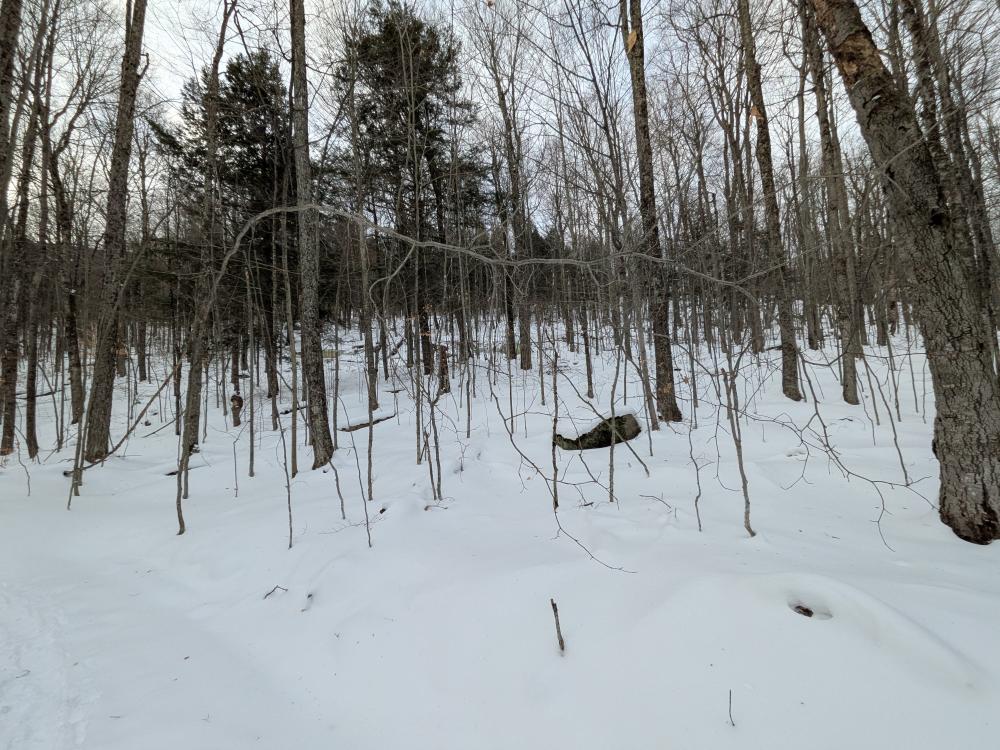
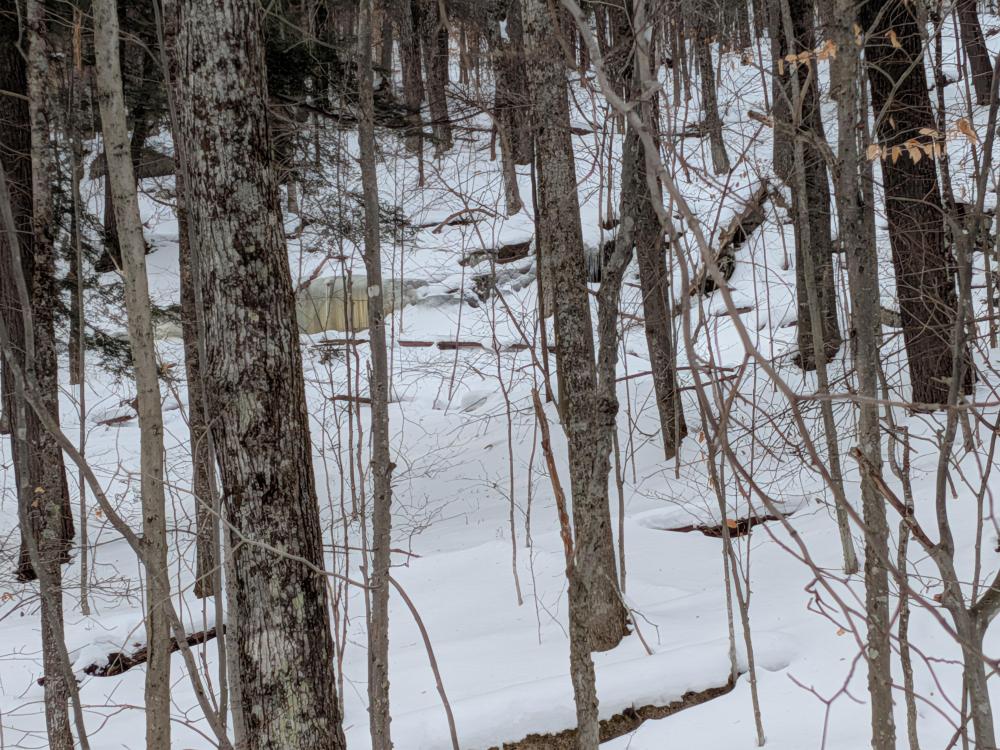
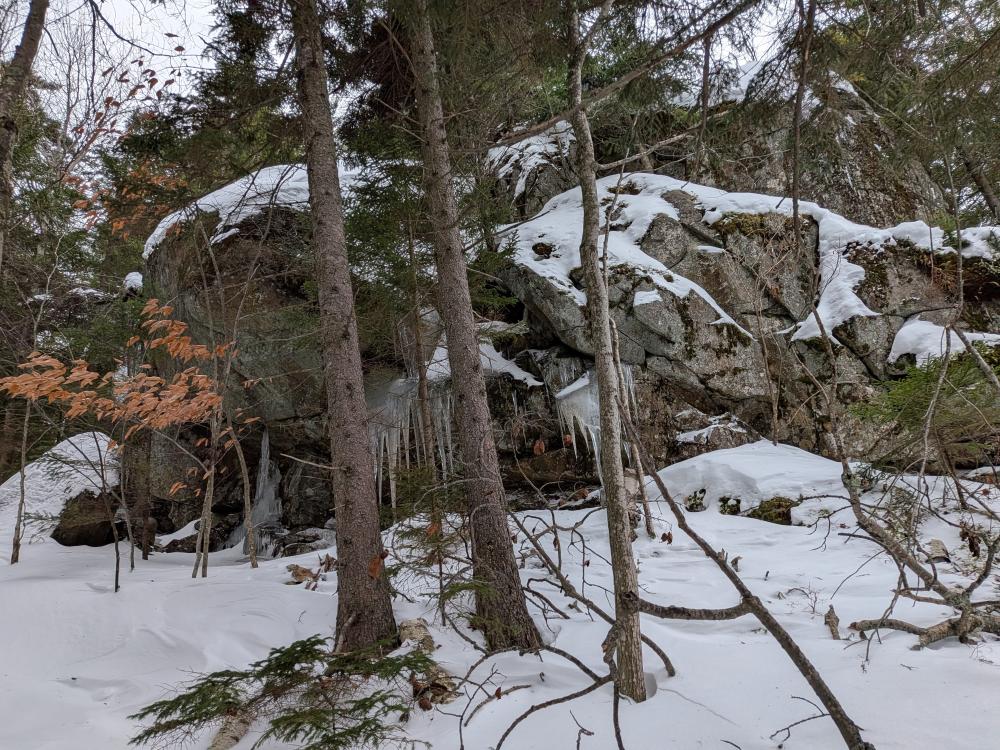
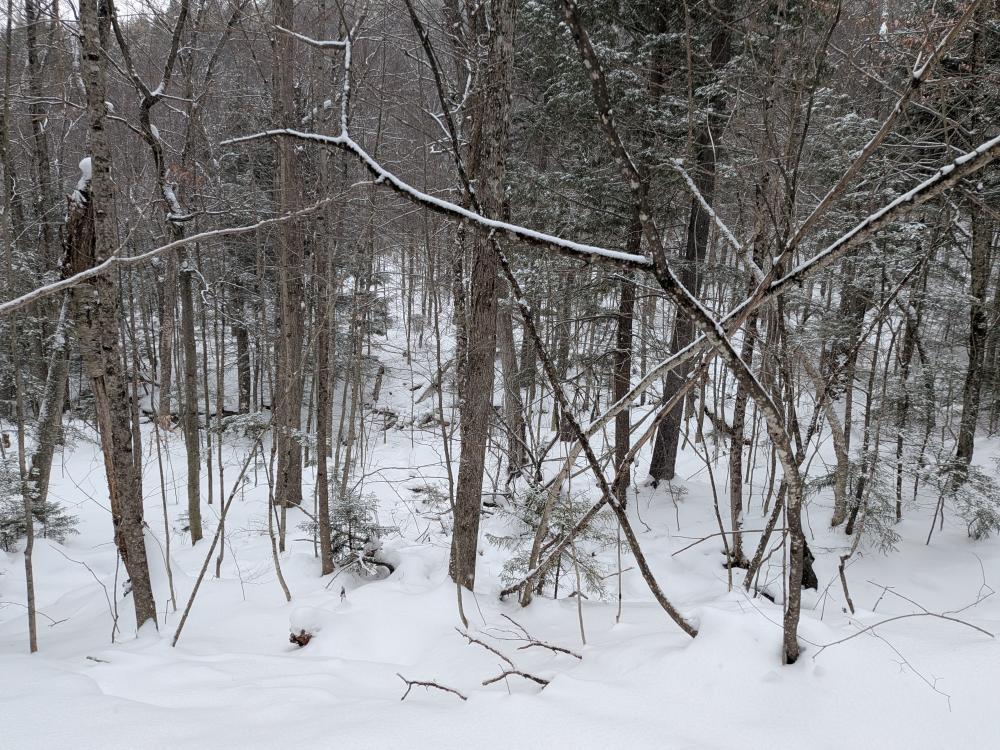
Coming down the other side was fun. There are a few ledges and drops to navigate around, but the mile down to the Old Dix trail is pretty nice compared to the difficult climb up. Similarly, the hike out on the Old Dix trail is lovely. There are a couple wet spots that did cause balling on our shoes, but nothing major. Such a beautiful forest to walk through, especially in winter.
So, that brings us to what is the technique? Well, ultimately is you do what works for you. Most people try to go straight up, with their shoes pointing straight up. If you find yourself sliding, try turning your shoes toe out (Duck Footing) and see if that gives you better traction. Another thing to try is to kick in to the snow to try to get a solid base for your foot. If the snow is solid enough, you can try to cut a foothold with your trekking poles by compacting the snow you're about to step on. The other thing to try is to go up sideways. This turns the traction bars to be across the slope and may give you a better grip as the entirety of the bars instead of just the teeth are biting. These sections suck, and as the season gets going and the trails become more defined, they start to get easier to navigate. Thankfully, these sections are not the majority of the trails, and many mountains don't even have them.
In the end, about 5.7 miles over 6.7 hours and 2500 feet of elevation. Year to date 320 miles over 219 hours and 15.7 miles of elevation.



Add new comment